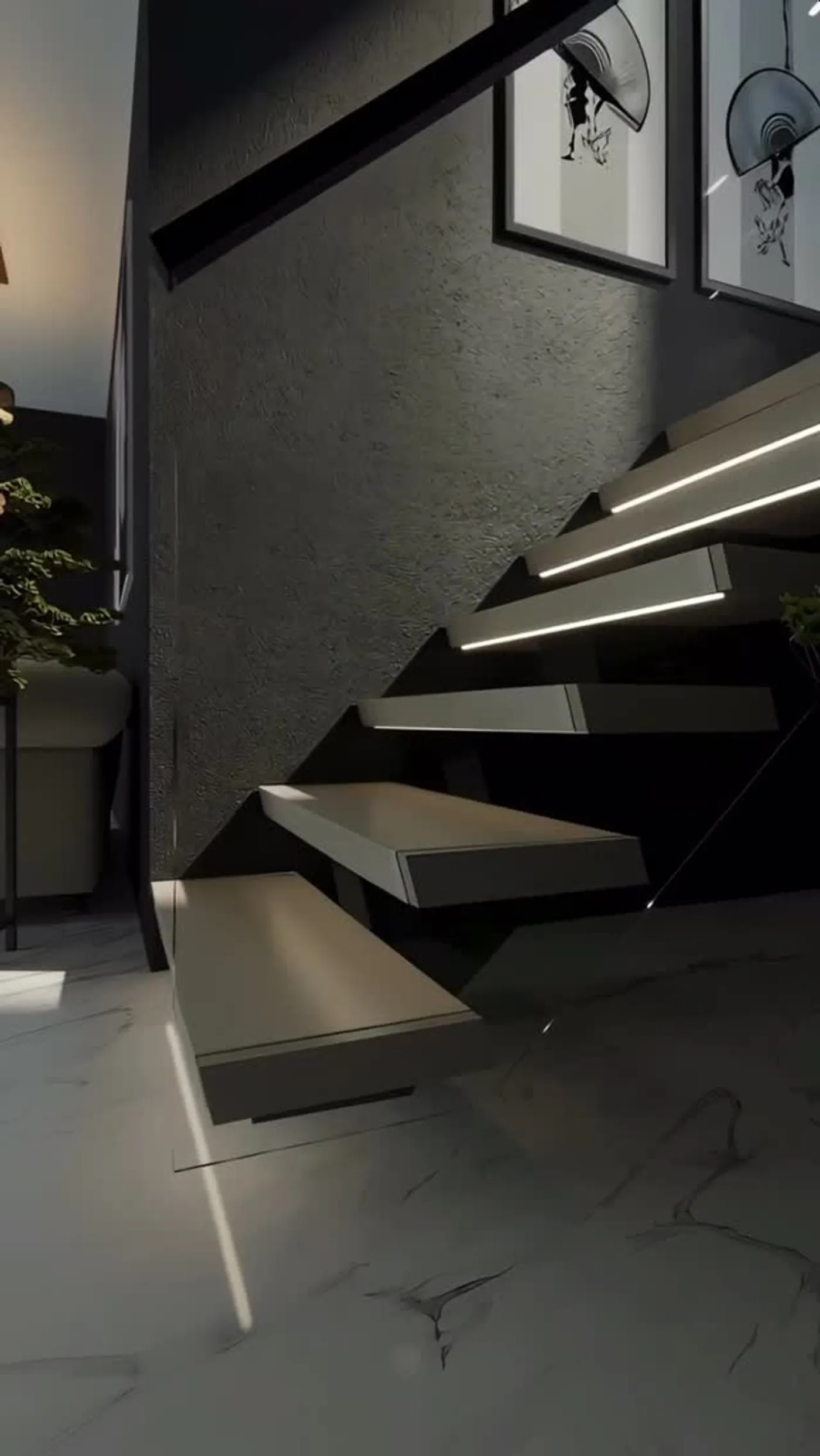
Integrated LED Lighting Systems for Floating Stairs in Hempstead, NY
UL-listed fixtures routed inside hollow stringer sections during fabrication — no exposed conduit, compatible with Lutron and Control4 systems in Nassau County custom homes.
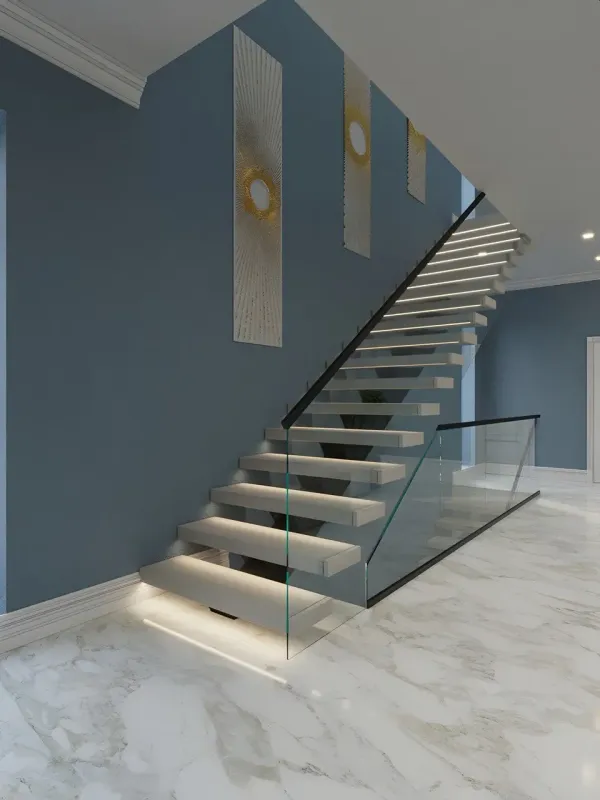
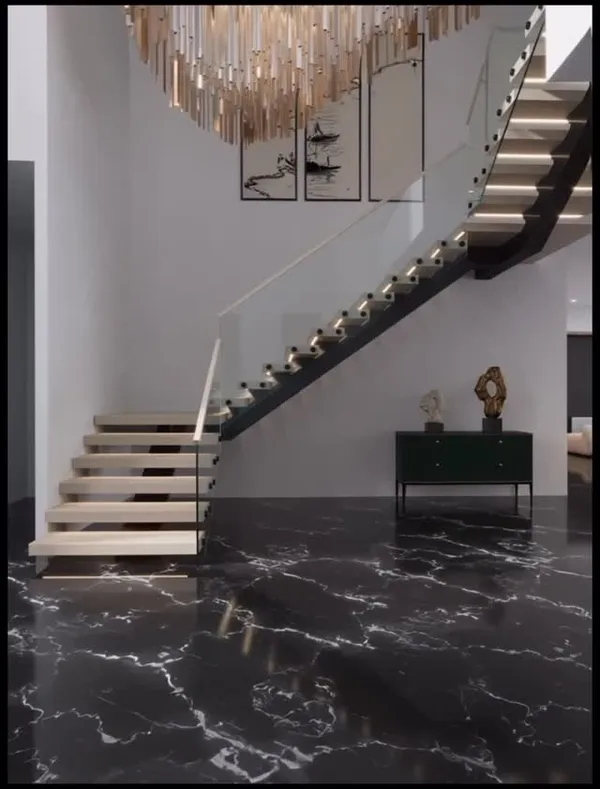
At Hempstead Floating Stairs , LED lighting is designed into the stair structure during fabrication — not added on with surface-mounted fixtures and exposed conduit after the fact.
The difference is visible in the finished stair. When lighting is retrofitted to an installed stair, you end up with visible wire runs along the stringer face, surface-mounted fixture bodies at each tread, and cable clips that break the clean geometry of the steel. When lighting is designed and routed inside the hollow stringer section before the stair ships from the shop, the finished stair has no visible electrical components — just a clean slot or lens at each tread that emits light. The fixture is recessed inside the stringer body and accessed through a removable access plate at the base if service is ever needed.
All fixtures specified for concealed stringer mounting are UL-listed for the application — specifically for installation inside enclosed metal raceways where heat dissipation is limited. This isn't a detail most contractors check, but Nassau County electrical inspectors do. A fixture that's UL-listed for open-air installation isn't necessarily rated for enclosed metal channel use, and a failed inspection on that basis delays the project close-out.
Lutron and Control4 compatibility is standard for Nassau County custom homes where whole-home automation is already installed. LED drivers specified for concealed stair lighting need to be compatible with phase-cut or 0-10V dimming signals used by those systems. We confirm the driver specification matches the dimming protocol on your existing system before fabrication — mismatched drivers cause flicker, buzzing, or loss of range at low dim levels, which is difficult to correct after installation.
Color temperature selection affects how the stair integrates with the surrounding interior. 2700K matches warm incandescent light and reads well against natural wood treads in traditional Nassau County colonial interiors. 3000K is cooler and works better with white oak or walnut in contemporary renovations. 3500K and 4000K are used for commercial applications where task lighting is the primary function. We discuss color temperature during design so the lighting integrates with the rest of your home's fixtures rather than creating a color mismatch on the stair.
Electrical rough-in coordination with your electrician happens before the stair ships. The rough-in plan identifies the low-voltage wire entry point at the base of the stringer, the line-voltage circuit location for the LED driver, and whether a separate switch leg is needed or the stair lighting ties into an existing smart switch zone. Running this coordination in advance prevents delays when the stair arrives on-site ready to install.
Ready to get started?
We'll review your Nassau County project and provide a detailed proposal within 48 hours.
- ✓ Licensed & Insured in New York
- ✓ Nassau County Permit-Ready Documentation
- ✓ On-Time Completion Guarantee
- ✓ Site Assessment
How We Deliver Integrated LED Lighting Systems
Integrated LED Lighting Systems — FAQ
Can LED stair lighting be added to an existing floating stair in Nassau County?
Does integrated stair LED lighting require a separate electrical permit in Nassau County?
What color temperature should I choose for stair LED lighting?
Will LED stair lights work with my existing Lutron system?
How long do the LED fixtures last inside the stringer and how are they replaced?
Start Your LED Lighting Integration Project Today
Contact Hempstead Floating Stairs for a site assessment and detailed quote tailored to your Nassau County property.