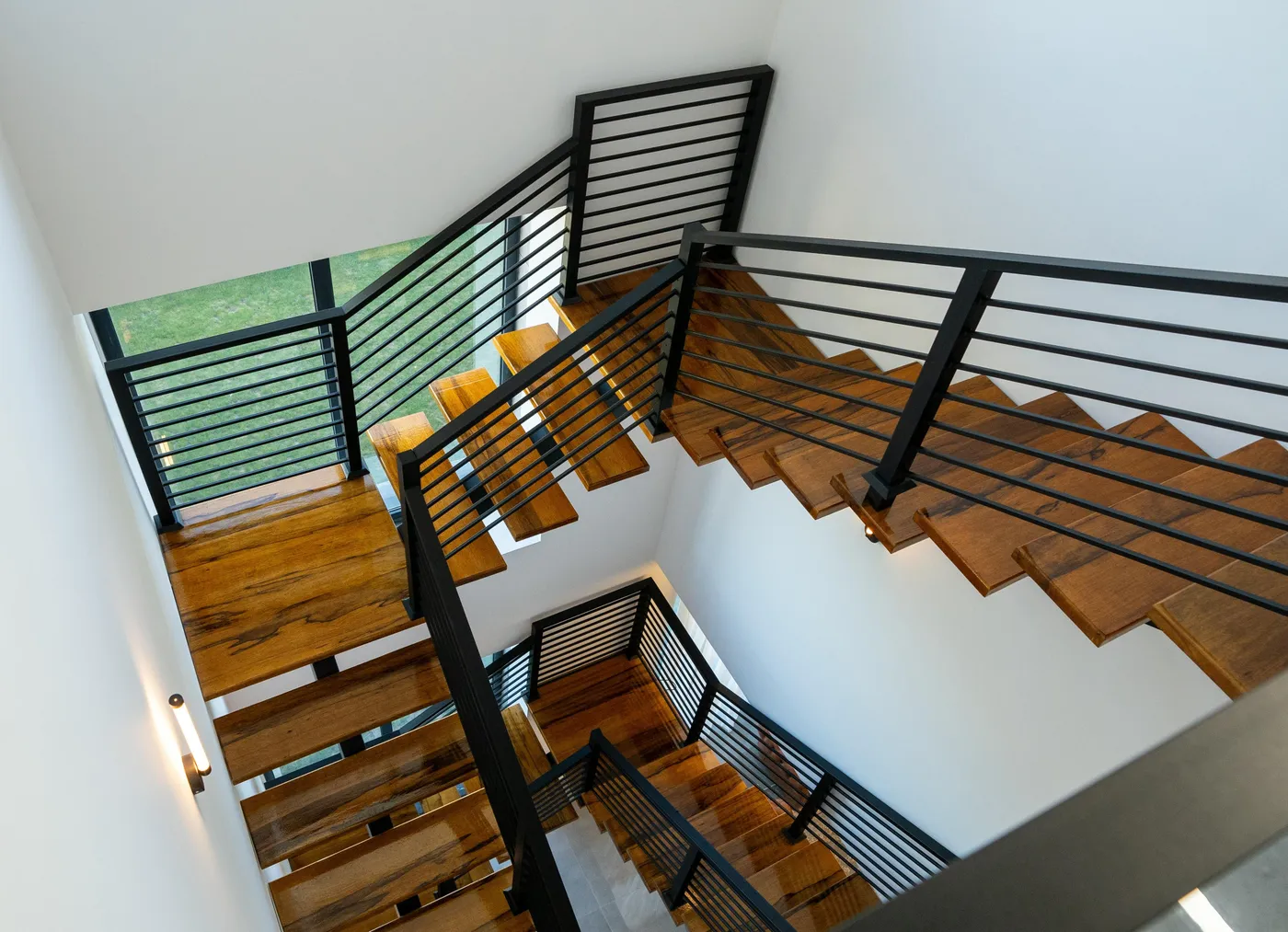
Custom Floating Stair Installation in Hempstead, NY
Cantilevered stair systems built from field measurements — designed for the structural realities of Nassau County homes, not generic catalog dimensions.
At Hempstead Floating Stairs , every floating stair project starts with a field visit — not a phone estimate. Nassau County homes have too much variation in framing age, wall construction, and floor-to-floor heights to quote from a description.
Most Long Island homes were built between the 1940s and 1980s, and colonial and split-level framing from that era wasn't designed with cantilevered stair loads in mind. Before we design anything, we verify whether the wall framing is 2x4 or 2x6, check stud spacing, and confirm the wall runs parallel or perpendicular to the floor joists. That structural audit shapes every decision that follows — anchor type, stringer profile, and whether reinforcement is needed before installation begins.
Nassau County Building Department requires a permit for any new stair installation. We prepare and coordinate that documentation from the start, including stamped engineering drawings that comply with the New York State Building Code. Tread depth minimums, riser height limits, guardrail heights — all of it gets resolved on paper before a single hole is drilled in your wall.
Long Island's climate puts real stress on floating stair connections. Temperature swings between January and August can exceed 100 degrees Fahrenheit. We use epoxy-set anchor systems rated for the thermal cycling that causes conventional anchors to loosen over time. Connection hardware is specified in 316-grade stainless for any application near the coast — Freeport, Merrick, and waterfront Hempstead properties especially.
Fabrication happens to the exact dimensions measured on-site. Steel stringers are cut and welded to match your actual floor-to-floor height and stairwell geometry, not adjusted to fit a standard run count. Wood treads are kiln-dried and acclimated in your home for a minimum of 72 hours before final attachment — a step most contractors skip that causes gapping and squeaking within the first winter.
Installation is performed by our own crew, not subcontractors. We coordinate directly with your general contractor or renovation schedule, and we handle the final building department inspection walk-through as part of the project close-out.
Ready to get started?
We'll review your Nassau County project and provide a detailed proposal within 48 hours.
- ✓ Licensed & Insured in New York
- ✓ Nassau County Permit-Ready Documentation
- ✓ On-Time Completion Guarantee
- ✓ Site Assessment
How We Deliver Custom Floating Stair Installation
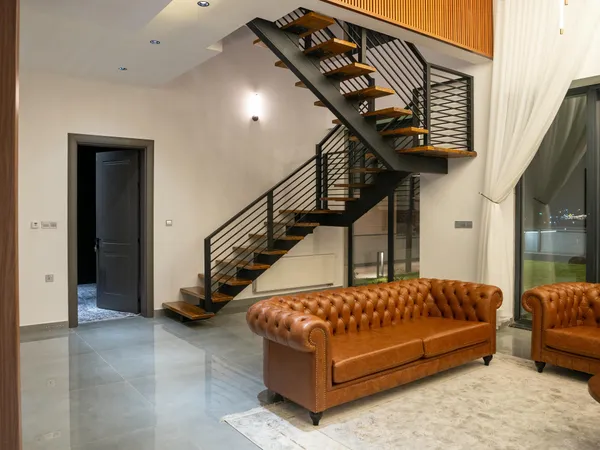
Custom Floating Stair Installation — FAQ
Do Nassau County homes need a permit for floating stair installation?
Can floating stairs be installed in an older Long Island colonial or split-level?
How does Long Island's climate affect floating stair construction?
What wood species work best for floating stair treads in Nassau County?
How long does a custom floating stair installation take in Nassau County?
Start Your Custom Floating Stair Project Today
Contact Hempstead Floating Stairs for a site assessment and detailed quote tailored to your Nassau County property.