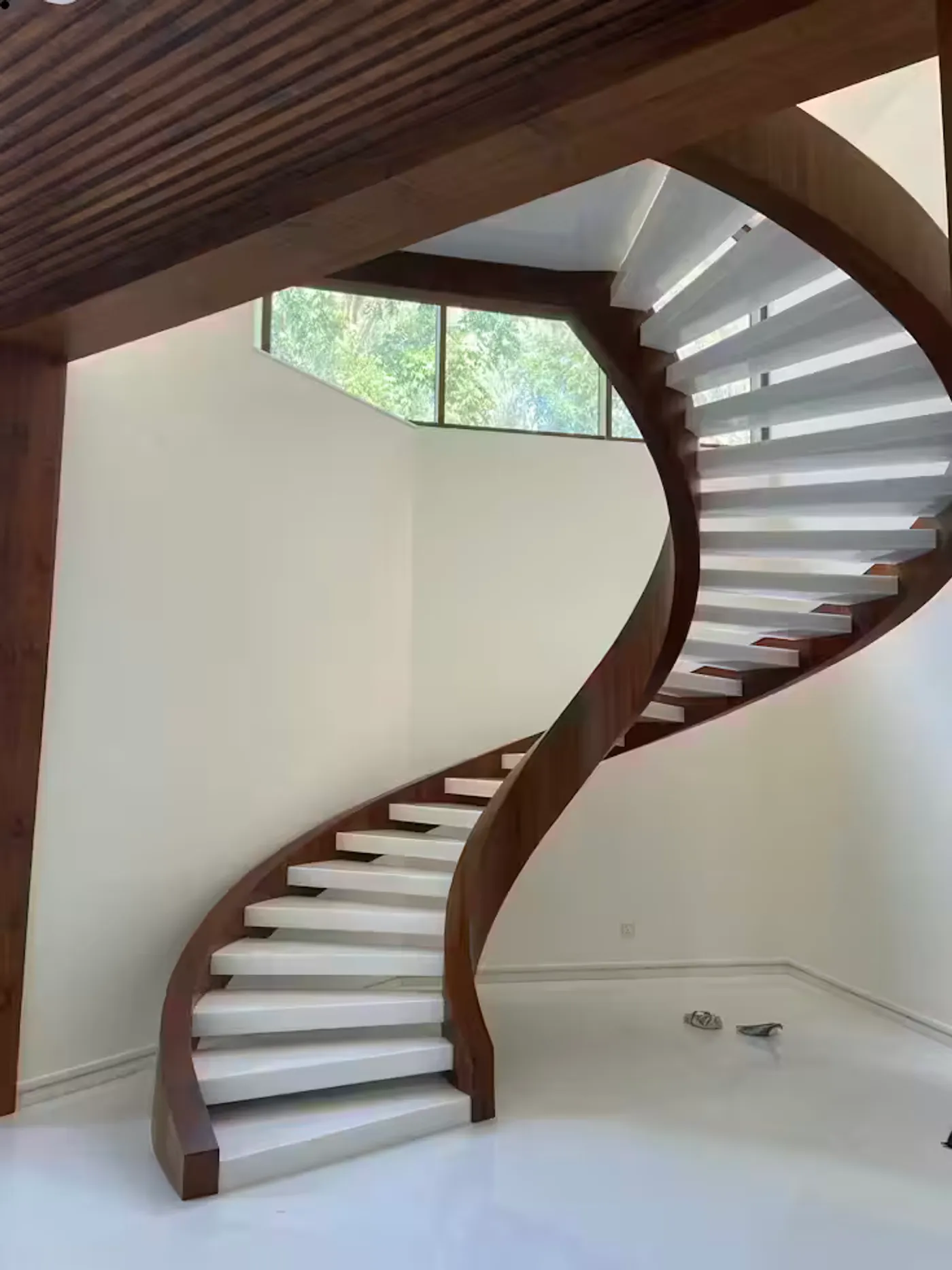
Loft Conversion Floating Stair Retrofit in Hempstead, NY
Attic conversions and bonus rooms in Nassau County homes — wall capacity, framing grade, and head clearance verified before any design work begins.
At Hempstead Floating Stairs , loft conversion stair retrofits in Nassau County start with an honest assessment of what the existing structure can support — not with a design presentation.
Cape cod homes on Long Island are among the most common loft conversion candidates. The low-slope roofline over the second floor often conceals usable space that homeowners convert into offices, guest rooms, or playrooms. The problem is that the wall framing in these homes — typically built in the 1940s through 1960s — was never intended to carry a cantilever stair load. The partition walls that bound the stair opening are often 2x4 non-load-bearing construction with no blocking between studs. We identify this during the structural walkthrough, before any contract is signed.
Head clearance is the other critical variable in cap cod conversions. The NYBC requires a minimum 6 feet 8 inches of clear headroom measured vertically from the stair nosing to any overhead obstruction. In an attic stair situation, that measurement has to account for the rafter slope above the stair path — which often means the stair location is more constrained than the homeowner expects. We measure the available headroom envelope on-site and size the stair run to fit within it, rather than designing a stair and discovering the headroom problem at installation.
Flooring at the upper landing is another consideration in loft retrofits. The existing attic floor may be unfinished OSB subfloor rated for storage loads, not occupancy. If the conversion is permitted as habitable space, the floor structure needs to meet occupancy live load requirements — 40 pounds per square foot for residential. We flag this during the site visit because it affects the permit scope and total project cost.
For split-level homes, floating stair retrofits often connect the ground-level entry or living area to a raised main level that was previously accessed by a traditional closed-stringer stair. Removing or relocating that stair and replacing it with a cantilevered system requires careful sequencing — the new stair structure has to be in place before the old one is removed if the level remains occupied during construction. We plan the installation sequence to avoid leaving any level without stair access overnight.
Permit scope for a loft conversion stair includes both the stair permit from Nassau County Building Department and, in many cases, a certificate of occupancy amendment if the loft space is being reclassified from storage to habitable. We identify the full permit requirement at the start so there are no surprises at the end of the project.
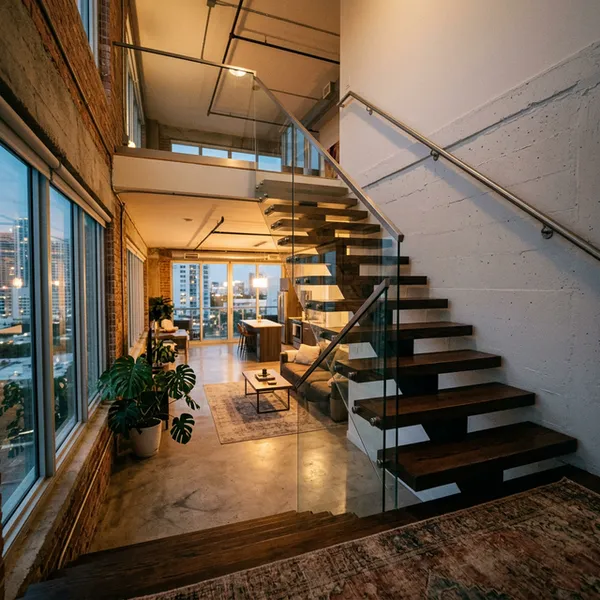
Ready to get started?
We'll review your Nassau County project and provide a detailed proposal within 48 hours.
- ✓ Licensed & Insured in New York
- ✓ Nassau County Permit-Ready Documentation
- ✓ On-Time Completion Guarantee
- ✓ Site Assessment
How We Deliver Loft Conversion Floating Stair Retrofits

Loft Conversion Floating Stair Retrofit — FAQ
Can a floating stair fit in the narrow stair opening of a Long Island cape cod?
Does converting an attic to living space require a separate permit from the stair permit?
What head clearance is required above a floating stair in an attic conversion?
Do I need to reinforce the attic floor before installing a stair?
Can we keep the house occupied during a loft stair retrofit?
Start Your Loft Conversion Stair Retrofit Today
Contact Hempstead Floating Stairs for a site assessment and detailed quote tailored to your Nassau County property.